There are places that don’t immediately make an impression.
They don’t raise their voices, they don’t try to imitate others, and they don’t need to prove themselves different from what they are. Basilicata is like that: unassuming, profound, authentic. It’s a land that should be listened to even before it’s visited. As a native of Basilicata, I’ve always believed my region had something special: a quiet beauty, made up of open landscapes, ancient villages, mountains, the sea, down-to-earth cuisine, and people who welcome you with genuine warmth. Today, I’m pleased to see that more and more travelers are discovering just that: Basilicata isn’t just a destination, but a different way of experiencing travel. In recent years, there’s been a lot of talk about sustainable tourism, taking things slow, authenticity, and experiences off the beaten path. For me, all of this has always existed in Basilicata. Here, time moves at a different pace. You stroll through stone villages, wander through natural parks, savor dishes that truly reflect the region, and meet people who make you feel like a guest—not just a tourist. It’s no coincidence that tourism in Basilicata is experiencing strong growth: data released in 2026 indicate that in 2025, Basilicata surpassed 1 million arrivals and approximately 2.83 million overnight stays, with record-breaking numbers for the region’s tourism sector.
A Region That Teaches You to Slow Down
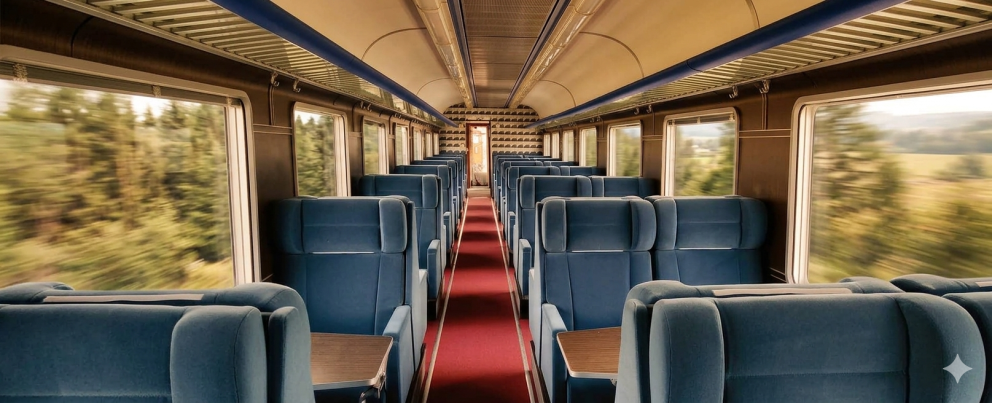
Basilicata is the ideal destination for those seeking a slow-paced journey. You can’t truly understand it by rushing through it. You have to stop, look around, talk to the locals, taste the local fare, walk, and get a little lost. The Basilicata Regional Promotion Agency has promoted the region precisely as a European destination linked to slow tourism and cycling tourism, with itineraries that pass through places like Matera, Aliano, Pietrapertosa, Moliterno, and Maratea. (Basilicata Turistica) This is one of the things I love most about my region: it doesn’t offer a tourism experience that’s been carefully planned out, but one that springs from the land itself. The scenic roads, the hilltop villages, the trails in the parks, the squares where people stop to chat, the home-cooked meals, the small lodging establishments—everything invites you to slow down. In Basilicata, luxury isn’t about excess. It’s about silence. It’s about space. It’s a sudden view of the mountains. It’s the scent of bread. It’s the time for a conversation.
Matera and the Power of Timeless Places
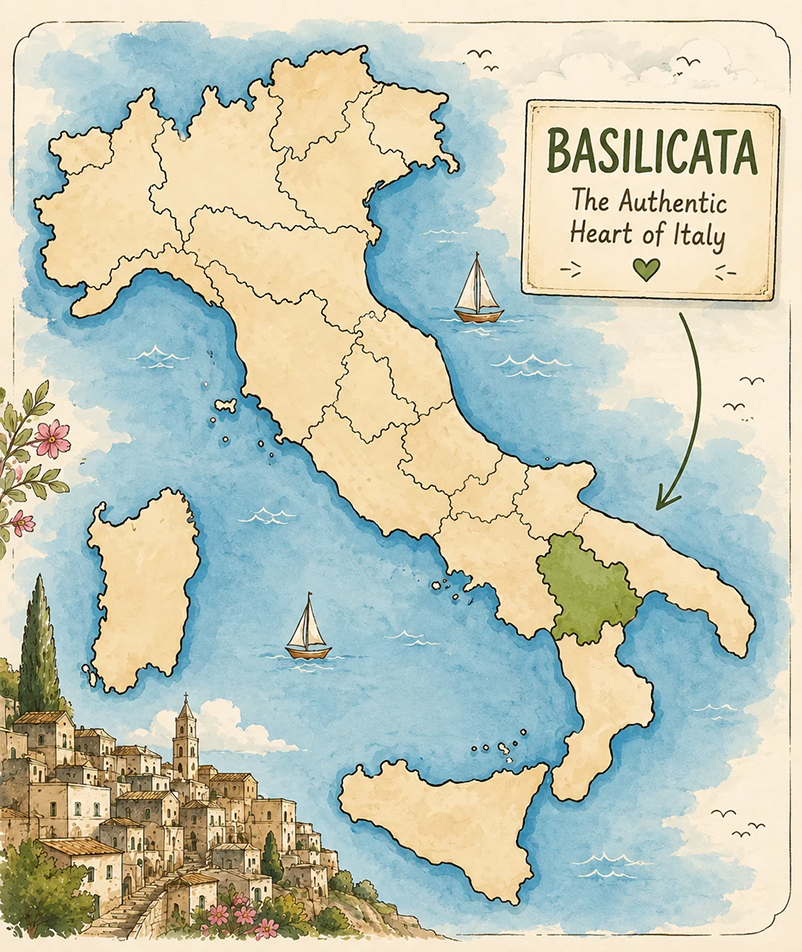
When people talk about Basilicata, the first name that often comes to mind is Matera. And rightly so. The Sassi and the Park of the Rock-Cut Churches have been recognized by UNESCO as a World Heritage Site since 1993 and represent an extraordinary example of a rock-cut settlement, perfectly adapted to the natural landscape of the Murgia. (UNESCO World Heritage Site) But Matera is not just a place to photograph. It is a city that stirs the soul because it seems to transcend time. Its stones tell of hardship, rebirth, memory, and beauty. Those who arrive in the Sassi sense something that goes beyond the monument: they feel the presence of generations, of stories, of life. Yet Basilicata is not just Matera. There’s an entire region to discover: Castelmezzano and Pietrapertosa, nestled in the Lucanian Dolomites; Venosa, the land of Horace; Acerenza, with its historic grandeur; Craco, with the suspended charm of abandoned places; Maratea, where the mountains meet the Tyrrhenian Sea; the Vulture, with its lakes and wines; and the Pollino, with its majestic landscapes. It is a region that is small only on paper. In reality, it encompasses a variety of worlds.
Discover Matera on this video.
Nature, Silence, and Sustainability
Those seeking a more sustainable vacation will find that Basilicata is a region that has managed to preserve its balance. About 20% of the region’s territory consists of parks and nature reserves; among these are the Pollino National Park, the Lucanian Apennines-Val d’Agri-Lagonegrese National Park, the Gallipoli Cognato and Little Lucanian Dolomites Park, the Murgia Materana Park, and the Vulture Park. (Basilicata Region) This natural wealth makes Basilicata perfect for those who love to walk, bike, explore, or simply breathe in the fresh air. Sustainability here isn’t just a buzzword: it’s a natural way of being in these places, respecting them. Even the international press has begun to take a closer look at Basilicata. National Geographic Traveler, in its feature on Maratea, described it as an ideal destination to escape Italy’s most crowded coastlines, highlighting its natural beauty, southern charm, and that still-little-known aspect that makes it special. (National Geographic) As a native of Basilicata, this attention makes me proud. But I also hope that Basilicata will grow without losing what makes it unique: its sense of proportion, its kindness, and the authenticity of its places.
Lucanian Cuisine: The Region on Your Plate
To truly get to know Basilicata, you have to sit down at the table. Lucanian cuisine is simple only on the surface: in reality, it is an ancient, down-to-earth cuisine deeply rooted in the land. Bread, olive oil, legumes, cheeses, cured meats, homemade pasta, “peperoni cruschi,” vegetables, and Vulture wines: each product tells a piece of history. The Basilicata Region boasts several products with PDO and PGI designations, including Pecorino di Filiano PDO, Melanzana Rossa di Rotonda PDO, Fagiolo di Sarconi PGI, Peperone di Senise PGI, Pane di Matera PGI, Canestrato di Moliterno PGI, Olio Lucano PGI, and Lucanica di Picerno PGI. (Basilicata Region) Lucanian cuisine doesn’t seek to impress with flashy effects. It’s made up of real ingredients, skilled hands, recipes passed down through generations, and flavors that linger. It’s a cuisine that speaks of family, seasons, villages, agriculture, and patience. Perhaps this is also why it’s so popular today: because it’s authentic. And authenticity, in contemporary tourism, has become one of the most precious forms of beauty.
Hospitality: Kindness as an Identity
There’s one thing that visitors to Basilicata often notice: the kindness of the people. Not a forced kindness, but a spontaneous one—the kind shown by those who give you directions, recommend places to eat, tell you a story, and make you feel welcome. I believe this is one of my region’s most important treasures. The landscapes are striking, the villages enchanting, and the cuisine captivating; but in the end, very often, what truly stays in your heart are the encounters. Basilicata still possesses this rare ability: to make travelers feel like they’re part of something, even if only for a few days. That’s no small thing, in an era when many tourist destinations risk becoming indistinguishable from one another.
Basilicata as Depicted by Writers, Artists, and Filmmakers
The strength of Basilicata has also been recognized by writers, filmmakers, and artists. Carlo Levi, who introduced Lucania to generations of readers through *Christ Stopped at Eboli*, wrote powerful words about this land, describing it as “one of the most authentic places in the world.” (*Fame di Sud*) It’s a phrase that still resonates with me today. Because Basilicata, when you truly encounter it, confronts you with something authentic: nature, memory, hard work, beauty, and the dignity of its communities. Cinema, too, has helped convey this strength. Pier Paolo Pasolini chose the Sassi of Matera to recreate Jerusalem in *The Gospel According to Matthew*; years later, major international productions have continued to find a unique visual power in the landscapes of Lucania. (Italy for Movies) Matera and other locations in the province also played prominent roles in Mel Gibson’s *The Passion of the Christ*: Italy for Movies highlights, among the various filming locations, the Civita di Matera, the Sasso Caveoso, the rock-cut complex of Madonna delle Virtù and San Nicola dei Greci, the Belvedere di Murgia Timone, and Craco. (Italy for Movies) And then there’s Francis Ford Coppola’s connection to Bernalda, the hometown of his grandfather Agostino Coppola. The director purchased Palazzo Margherita in 2004 with the intention of transforming it into a boutique hotel and introducing visitors to a region that he himself considered splendid yet still relatively unknown. (Dimore Storiche Italiane) These are important accolades, to be sure. But for me, the greatest value lies elsewhere: seeing that those who come here often leave with the feeling of having discovered a more intimate, more human, and more authentic Italy.
A Trendy Destination, Yet with an Ancient Soul
Today, Basilicata is increasingly being touted as a new trendy destination. And in part, this is true: interest is growing, the number of travelers is rising, and articles, itineraries, and experiences are multiplying. But I believe its charm lies precisely in the fact that Basilicata wasn’t born as a “trend.” It is an ancient, unpretentious, and generous land. A region that doesn’t have to pretend to be authentic, because it simply is. Those seeking sustainability find nature and open spaces. Those seeking tranquility find silence and landscapes. Those seeking gastronomy find authentic products and distinctive flavors. Those seeking history find Matera, Venosa, the villages, the rock-hewn churches, the castles, and the hilltop towns. Those seeking humanity find people capable of welcoming visitors with simplicity.
Basilicata is not a place to be consumed in a hurry. It is a place to be experienced slowly. And perhaps that is precisely why people love it so much today: because in a fast-paced world, Basilicata continues to teach us the value of taking things slowly.